


Why Financial Freedom Fails Without Real Money
Richer Soul Podcast • Episode 495 • David Morgan
Financial freedom is one of those phrases that sounds solid until you stop and ask what it actually rests on. A healthy income, a strong portfolio, and a disciplined savings plan can all look reassuring. But if the money underneath the system keeps losing purchasing power, or if access to that money becomes more conditional than we want to admit, then freedom starts to look more fragile than most successful people realize.
That is what makes this conversation with David Morgan so timely.
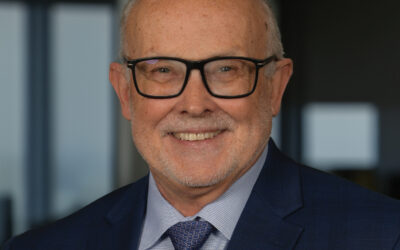
Morgan is one of the most recognized voices in precious metals and macroeconomics. He publishes The Morgan Report, authored The Silver Manifesto, and has spent decades helping people understand debt, inflation, and the monetary system beneath the headlines. In this Richer Soul conversation, he does more than talk about gold and silver. He challenges the assumptions many high performers carry about wealth, independence, and what it really means to be secure.
And for anyone pursuing a purpose driven life, that matters. Because a wealth mindset is not just about earning more. It is about seeing clearly, acting deliberately, and building a life that can hold up under pressure.
A Childhood Quarter That Changed Everything
Morgan traces his lifelong interest in money back to a simple experience as a child. He had spent weeks saving quarters earned from watering trees on his family’s property. Then one day his father handed him a 1965 quarter that felt different from the older coins he had been collecting.
That moment stayed with him.
He did not yet have a vocabulary for monetary history, fiat currency, or debasement. But he recognized that something had changed, and he sensed that the new coin could not be equivalent to the old ones in any meaningful way. For Morgan, that early observation became the beginning of a much deeper inquiry into what money is and what makes it trustworthy.
That story lands because it is concrete. Most people do not begin questioning the system through textbooks. They begin when reality no longer matches the story they were given. For Morgan, the quarter was the first crack in the surface.
For many entrepreneurs and leaders today, the crack shows up differently. It shows up in rising revenues that do not feel as secure as they should. It shows up in the uneasy feeling that success on paper is somehow not translating into actual peace. It shows up in the gap between the numbers and the lived experience.
Why Money Must Store Value
Morgan’s basic argument is simple, even if its implications are not. Money, he says, must do three things. It must serve as a medium of exchange, a unit of account, and a store of value. His contention is that modern fiat currency does the first two well enough, but fails at the third.
That failure matters because it changes how people experience time.
When money stores value, disciplined effort can be carried forward into the future. You can save today and trust that what you saved will still represent meaningful purchasing power later. But when currency is steadily debased, the measuring stick itself keeps shrinking. You may still be earning more. You may even believe you are making progress. But the terms are being altered in the background.
This is where the conversation becomes deeply relevant for anyone interested in financial freedom. Freedom is not just about having assets. It is about whether the assets you hold, and the currency you rely on, preserve optionality over time.
Morgan frames inflation as a silent tax. Whether one agrees fully with his monetary interpretation or not, the emotional truth behind that phrase resonates with a lot of people right now. High achievers are working hard, producing more, and still feeling like the margin keeps getting thinner. That is not just a budgeting issue. It is a systems issue.
The Debt Problem Beneath the Surface
One of Morgan’s core themes is that a debt-based system requires constant expansion. In his view, that makes it mathematically unstable over time. He uses a simple line that captures the point well: no tree grows to the moon.
What makes that insight powerful is that it forces a shift in perspective. People are often taught to evaluate economic health by market levels, home prices, or headline growth. Morgan wants listeners to look underneath those indicators and ask what kind of fuel is driving them.
If rising asset values depend on ever-expanding debt, then apparent strength can mask structural weakness.
Rocky helps ground this point with one of the most vivid lines in the episode. He compares the economic cycle to a party that needed more and more stimulation to keep going. First beer, then shots, then something harder. It is a memorable metaphor because it captures the emotional logic of repeated intervention. The goal becomes keeping the feeling alive rather than dealing honestly with the underlying condition.
That observation also connects to leadership. In business and in life, unsustainable systems often survive by escalating inputs. More effort. More noise. More leverage. More distraction. But at some point the structure itself has to be examined.
That is true for economies, and it is true for people.
Gold and Silver as Insurance, Not Identity
Morgan’s most repeated practical point is that gold and silver are not investments first. He sees them as insurance and savings outside the system. Whether a listener fully agrees with that strategy or not, the framing is important.
Insurance is not about excitement. It is about resilience.
In a culture that often turns every financial conversation into a performance of upside, Morgan is arguing for a different posture. He is not telling people to abandon all conventional assets. He is making the case for a side bet, a layer of protection that does not depend on someone else’s promise, a bank’s solvency, or a digital ledger’s continued permission structure.
That distinction matters for a wealth mindset. Real maturity is not only about pursuing gains. It is also about understanding fragility. Strong builders know how to protect foundations, not just decorate outcomes.
This is especially relevant for entrepreneurs who have spent years building businesses, investing profits, and creating a life that appears stable from the outside. If all of that stability rests on assumptions that are no longer solid, then prudence becomes more important than appearances.
Morgan also moves carefully, at least in principle, toward diversification. He suggests fully paid-for real assets, physical metals, and selective exposure to mining equities rather than blind faith in one category. That makes his argument broader than a single commodity pitch. He is pushing listeners to think in terms of sovereignty, liquidity, and counterparty risk.
Digital Convenience and the Risk of Control
The part of the episode that will feel most provocative to some listeners is Morgan’s warning about digital money, technocracy, and programmable control. He believes the world is moving toward systems where financial access can become tied to identity, behavior, and permission rather than remaining a neutral store of personal agency.
This is where promotional copy needs to stay careful and fair. These claims should be framed as Morgan’s analysis, not as settled fact. Still, the reason the conversation lands is not just the extremity of the forecast. It is that many people already sense how convenience and dependence can blend.
The modern world rewards frictionless living. Tap to pay. Subscribe automatically. Store everything in the cloud. Hand more and more mediation to platforms. The upside is obvious. But the deeper question is what happens when convenience becomes the default gateway to participation.
If access is centralized, then freedom is no longer just about ownership. It is about permission.
That concern extends beyond finance into personal development and leadership. Every system that promises greater efficiency also invites the question of who defines the terms. Leaders who understand this do not reject technology. They simply refuse to confuse convenience with security.
Why This Conversation Belongs on Richer Soul
At first glance, a discussion about precious metals and monetary history may seem more tactical than spiritual. But by the end of the episode, it becomes clear why it fits Richer Soul so well.
Morgan closes on something much more human than markets. He talks about defining success internally rather than borrowing the world’s definition of it. He points out that when life ends, what remains is not the scorecard of possessions, but the quality of one’s relationships, contribution, and integrity.
That is the part of the conversation that widens it from finance into life fulfillment.
A purpose driven life requires discernment. It requires knowing where your values are real and where they are inherited. It requires asking whether your pursuits are making you stronger, freer, and more aligned, or merely more decorated.
That is also why the Richer Soul audience will recognize themselves in this episode. Many high achievers have already discovered that external wins do not automatically resolve internal questions. More money can reduce stress. It can create options. It can absolutely matter. But it cannot answer the deepest question of all, which is what kind of life you are actually trying to build.
Rocky’s Perspective
What I appreciated in this conversation is that it is not really about fear. It is about clarity. If the system is more fragile than we thought, then the right response is not panic. It is honesty. It is taking a harder look at what we trust, how we define security, and whether our habits actually support the freedom we say we want.
I also think this conversation reminds us that winter is not always the enemy. In nature, winter clears what is weak and prepares the ground for what comes next. We have spent a long time trying to avoid winter in our economy and in our lives. But without that reset, we can lose touch with what is durable, what is inflated, and what is truly worth protecting.
One Question to Sit With
If the systems around you became less reliable tomorrow, what part of your wealth would still give you peace?
Conclusion
David Morgan’s message is not that everyone needs to think exactly as he does. It is that people need to think more seriously about the assumptions they live under. That is valuable advice whether you are evaluating markets, leadership, or your own life.
Financial freedom becomes more real when it is built on clarity, resilience, and an honest definition of enough.
About David Morgan
David Morgan is one of the world’s most trusted voices on precious metals, macroeconomics, and the silent storm building beneath the financial system. As a strategist with over four decades of experience, he’s guided thousands of investors through the fog of fiat currency, market manipulation, and debt-driven illusion. He publishes The Morgan Report, authored The Silver Manifesto, and is frequently featured on major media outlets and financial documentaries including the Four Horsemen film.
But David’s mission goes far beyond the financial markets. He challenges the mainstream narrative and encourages audiences to see beyond political spin, economic distraction, and digital overreach. His upcoming documentary Silver Sunrise confronts the erosion of liberty through centralized monetary control. David teaches people how to think—not what to think—empowering them with clarity, humility, and context in an increasingly confused world.
Links
Website: https://www.themorganreport.com/
Blog: https://www.themorganreport.com/blog/
Medium: https://medium.com/@themorganreport
Substack: https://themorganreport.substack.com/
LinkedIn: https://www.linkedin.com/in/thedavidmorgan/
Facebook: https://www.facebook.com/TheMorganReport
YouTube: https://www.youtube.com/@silverguru
Watch the full episode on YouTube: https://www.youtube.com/@richersoul
Richer Soul Life Beyond Money. You got rich, now what? Let’s talk about your journey to purposeful, intentional, amazing life. Where are you going to go and how are you going to get there? Let’s figure that out together. At the core is the financial well being to be able to do what you want, when you want, how you want. It’s about personal freedom!
Thanks for listening!
Show Sponsor: http://profitcomesfirst.com/
Schedule your free no obligation call: https://bookme.name/rockyl/lite/intro appointment 15 minutes
If you like the show please leave a review on iTunes: http://bit.do/richersoul
https://www.facebook.com/richersoul
Some music provided by Junan from Junan Podcast
Any financial advice is for educational purposes only and you should consult with an expert for your specific needs.
Podcast: Play in new window | Download
Subscribe: RSS


0 Comments