
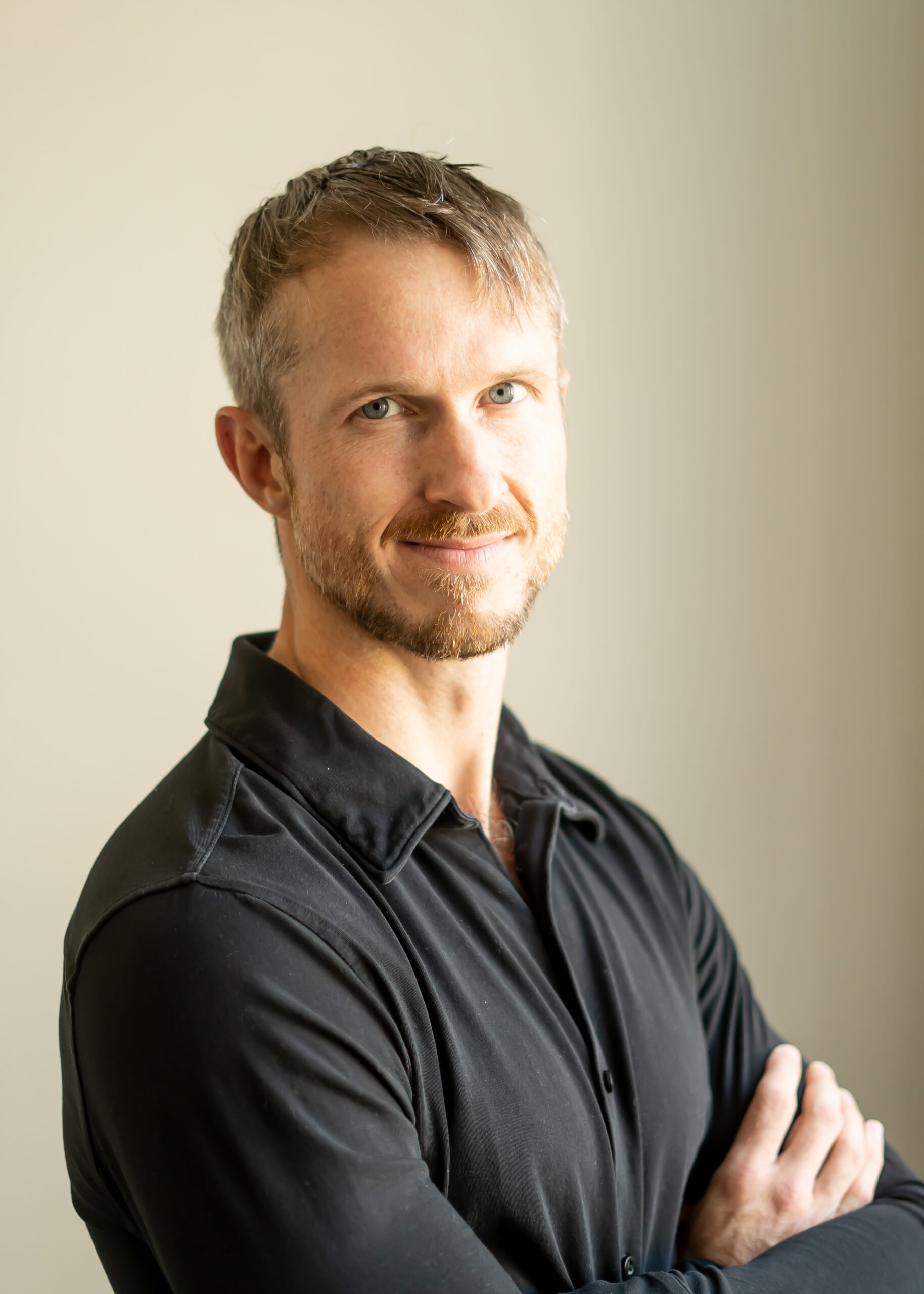

Why High Achievers Hit Invisible Ceilings
Richer Soul Podcast • Episode 502 • Paul Salter
What do you do when you are doing everything right and the result still does not move?
Paul Salter knows that question intimately. For five consecutive years in his coaching business, he worked more hours, served more clients, and refined his offer. And within $10,000, sometimes above, sometimes below, he landed in the same place every year. He was not failing. He was grinding. And somehow, he could not get past a number he did not even know he had set.
The answer, when it came, was not a marketing strategy. It was a financial aid form his father had filled out when Paul was applying to college.
The Income Ceiling Nobody Talks About
There is a version of self-sabotage that gets a lot of attention. Procrastination. Perfectionism. Overworking. These are easy to name and nearly as easy to find advice about.
But Paul Salter works on the layer underneath. He spent years as a registered dietitian and sports nutrition coach, working at the collegiate, professional, and Olympic level. Early in that work, something kept showing up in his clients: they already knew what to eat. They were not lacking information. They were lacking something else.
“Everybody I was working with, they knew how to make healthy eating choices,” he said. “It wasn’t like I was opening up this whole incredible new vast amount of knowledge to them. They already knew what to be doing, but they weren’t doing it.”
That observation pulled him toward mindset coaching. And eventually toward hypnotherapy, after a personal experience on a professional poker table cracked something open in him.
Paul had started playing poker seriously, studying obsessively, working the way he always worked. And he kept losing. Not a little. Steadily. It was, he described, like lighting money on fire.
He hired a mindset coach who happened to practice hypnotherapy. In a relatively short period of time, they uncovered something Paul had been carrying for years without knowing it: a scarcity mindset rooted in watching his father work a 100% commission job for three decades, with all the quiet anxiety that never fully left the background of a household.
That work led to another discovery. For five years, his income had plateaued. And when he looked closely, the invisible ceiling matched something concrete: the number he had seen on his father’s financial aid form. The combined income of his parents. A figure Paul had internalized as the upper limit of what was safe to earn.
“It didn’t feel right or safe to out-earn my parents,” he said. “It’s almost like I had this belief it was disrespectful to outperform them financially.”
He can laugh about it now. He also knows exactly how irrational it sounds, and exactly why irrationality has nothing to do with how powerfully a belief operates.
Why Ambition Is Not the Whole Story
Paul’s belief about his parents is an extreme version of something much more common. Most high achievers are not held back by laziness or a lack of effort. They are held back by a belief that success at a certain level is unsafe, disloyal, or undeserved.
The mechanism is straightforward even when the belief is not. The subconscious, Paul explained, treats identity as something to protect. When growth threatens the version of yourself that feels familiar, the mind gets crafty. It deploys the habits and patterns that kept you safe before, even when those patterns now cost you.
“Our identity encompasses our beliefs, our habits, our memories, our emotions. So anytime we’re doing work to change or unlearn those, it’s a real threat to our identity, which is life as we know it, all we know.”
This shows up physically before it shows up in the ledger. Chest tightness. Rumination. The compulsion to stay connected, always available, never off. Paul made the point that most high performers have misread these signals as evidence of serious engagement. They wear the stress as a badge. They have been running on cortisol for so long it simply feels like Tuesday.
“They’ve become obsessed or addicted to operating from stress, not addicted to winning.”
The distinction matters because burnout is not a consequence of working too hard. It is a consequence of a nervous system that never learned it was safe to stop.
The Four Beliefs Worth Examining
Paul has organized his coaching around four core beliefs he sees in almost every client.
The first is about the self: Am I worthy, deserving, and capable? The second is about life: Is it happening to me or for me? The third is about others: Is it safe to trust? And the fourth is about money: Is there enough, or is there never enough?
Most people, Paul said, have a deficiency in at least one of these. And when a high achiever pushes toward a genuinely new level of success, often all four come online simultaneously.
“Am I really capable? Do I really deserve this? Did I just get lucky? Was that a fluke?”
This is what imposter syndrome actually is: not a personality flaw, but a mismatch between the level of success being pursued and the belief system that was installed before the person had any say in the matter.
Researchers estimate that 95% of core beliefs are formed by age seven. The adult who says “I know exactly what I should be doing and I keep not doing it” is very often still running software installed decades before they had the vocabulary to question it.
What the Body Already Knows
One of the more striking parts of this conversation was Paul’s description of how he works with clients in sessions. He requires video for all coaching calls. Not for convenience, but because the non-verbal information is as important as what is said.
Eye movement, facial expression, body language, and the physical shift that happens when a conversation approaches something buried. “That non-verbal feedback is just as, if not more important than what it is that client says.”
He described a nonprofit CEO whose childhood involved bouncing between foster homes where she was physically, verbally, emotionally, and sexually abused, most often by perceived powerful men. She had survived. She had built a career. She was trying to raise capital for a nonprofit connecting kidney donors with recipients. And every time she entered a boardroom, she dissociated. She could not articulate her vision. She became, in her own description, a shell of herself.
She did not know why.
Paul did. And the work they did together, going back to that younger version of her and establishing a sense of safety she had never had, produced a change that looks like business results from the outside. Inside, it was something closer to a rescue.
“That nonprofit is thriving with partnerships with some of the biggest medical clinics in the nation. And it’s because of her leadership, confidence, and communication skills.”
What changed was not her intelligence or her mission or her knowledge of the problem. What changed was her body’s answer to a single question: Is it safe here?
The Calendar and the Checkbook
Rocky offered one of the sharper observations of the conversation almost as an aside. When Paul noted that most CEOs claim their family is the most important thing in their life, Rocky replied:
“The calendar and the checkbook show what’s really going on. You don’t have to talk to the person. Just look at what their calendar says and where their money goes and you’ll have pretty good clarity of what their life actually is.”
It is a useful diagnostic because it removes the story. What a person says they value and what they actually protect are two different data sets. The calendar does not lie. The bank account does not lie. And the gap between stated priorities and lived priorities is itself a form of buried belief, a set of decisions that have been made so many times they have become invisible.
Rocky’s Perspective
What struck me in this conversation was the moment Paul described his father’s face when Paul first told him how much he was earning. He expected pride. What he saw, or what he internalized, was something closer to shock or disbelief. And he carried that reaction forward as evidence that outearning his father was a form of harm.
He has never gone back to have that conversation directly. He keeps it at: they know I’m doing well.
I understand that. There are truths that are too complex to address head-on with the people who taught them to us, often without knowing it. What I know from years of working with business owners is that the financial beliefs they carry into their company almost always came from home first. The business is just where they finally become expensive enough to notice.
One Question to Sit With
If you stripped away the hours and the hustle and looked only at the results, would you be able to tell the difference between ambition and avoidance?
Conclusion
Paul Salter spent five years working harder and arriving at the same place. The ceiling was not built by the market. It was built by love, loyalty, and a belief that protecting people he cared about meant not surpassing them.
Once he found it, it moved.
The version of this you are carrying is probably different. But the mechanism is the same. And the calendar and the checkbook, as Rocky pointed out, are already telling you where to look.
About Paul Salter
Paul Salter is a high-performance hypnotherapist, mindset and performance coach, keynote speaker, author, and host of The Unstuck High Performer Podcast.
With over 16 years of coaching experience and nearly 4,000 clients served, Paul helps high-performers—especially entrepreneurs, executives, and athletes—unlearn the destructive patterns of thinking, feeling, and behaving that limit their potential. He specializes in working with individuals who know what to do but struggle to execute consistently, particularly when pressure is high and the stakes matter most.
His approach blends hypnosis, neuroscience, performance psychology, and real-world coaching to create lasting, identity-level change—the deep work most people avoid until they realize it’s the only path to sustainable, next-level success.
Paul’s clients include CEOs, C-suite executives, entrepreneurs, professional athletes, and professional poker players. He also has a strong focus and passion for working with golfers and professionals in the real estate space.
Paul believes that when someone knows what to do but consistently fails to follow through, the issue is not a lack of knowledge—it’s a mindset problem. He helps clients get unstuck, eliminate self-sabotage, and perform to their highest potential.
Links
Instagram: @thepaulsalter
Coaching: https://form.typeform.com/to/IxSaVpmF?typeform-source=qsisso5alne.typeform.com
Watch the full episode on YouTube: https://www.youtube.com/@richersoul
Richer Soul Life Beyond Money. You got rich, now what? Let’s talk about your journey to purposeful, intentional, amazing life. Where are you going to go and how are you going to get there? Let’s figure that out together. At the core is the financial well being to be able to do what you want, when you want, how you want. It’s about personal freedom!
Thanks for listening!
Show Sponsor: http://profitcomesfirst.com/
Schedule your free no obligation call: https://bookme.name/rockyl/lite/intro appointment 15 minutes
If you like the show please leave a review on iTunes: http://bit.do/richersoul
https://www.facebook.com/richersoul
Some music provided by Junan from Junan Podcast
Any financial advice is for educational purposes only and you should consult with an expert for your specific needs.
Podcast: Play in new window | Download
Subscribe: RSS



0 Comments