
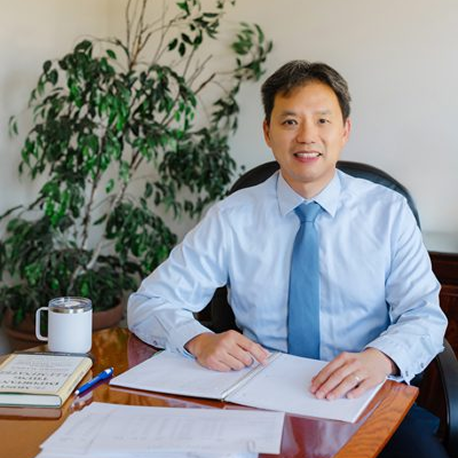

The Wealth Nobody Sees: Why Frugal Always Beats Flashy
Richer Soul Podcast • Episode 501 • Earl Yaokasin
For several years, Earl Yaokasin drove his 20-year-old Honda Civic to his children’s private school and parked it as far from the entrance as possible.
He was not looking for extra steps. He was making sure no one saw the car.
The lot was full of Bentleys, late-model BMWs, and luxury SUVs. Earl, a CFA charterholder and founder of a fiduciary wealth management firm, felt the quiet pull of embarrassment that comes from watching people arrive in cars you do not drive. He assumed those families had more. He adjusted his parking spot accordingly.
Then, over time, he started talking to them. And what he found changed the way he thought about the whole parking lot.
Most had almost no savings. Some were on scholarship. Some had grandparents quietly covering tuition that looked, from the outside, like easy money. The Bentley was not evidence of wealth. It was a payment for the appearance of wealth.
Earl, who had been eating half a $5 Subway footlong for lunch since his first years in America, was the one building real wealth. He just had not been told to feel proud of it yet. The wealth nobody sees is usually the wealth that is actually there.
From Soda Bottles to a Fiduciary Firm
Earl grew up Chinese in the Philippines, which gave him two things early: a culture that saves and an ambition pointed somewhere specific.
In first grade, he collected discarded soda bottles from his school and turned them in for recycling credit. Enough bottles, and he could afford a barbecue pork skewer from the canteen. By second grade, he was selling snappable bracelets in every color. By the time he was a teenager, he was moving CDs, concert tickets, cell phones, and fireworks.
His mother repeated one phrase so often that Earl still hears it today: spend two levels below your means. He is asked regularly whether he would have been frugal without her. His honest answer is yes. The disposition was already there. The phrase gave it a name.
His goal from early in his life was to become an investment manager in the United States. He understood that in the Philippines, success in the markets depended more on connections to political insiders than on analysis of fundamentals. The game required access. In the US, he believed that discipline and knowledge could still win.
He graduated at the top of his class from the Philippines’ leading business school and moved to the United States in 2001. He started at $7.75 an hour doing data entry in a Nordstrom warehouse in Rancho Cucamonga. He turned it into a game, trying every day to beat his previous record for speed and accuracy. Within two weeks, people were asking who the new hire was.
He moved to an appraisal company for $10 an hour, then added a second job at a Bank of America call center collecting overdue credit card accounts. His coworkers threatened and lied to get payments. Earl listened. He asked people when their paychecks arrived, noted the dates, and called on those exact days. His collection numbers were strong. His method was simply to be the most honest person in the building.
He drove from Rancho Cucamonga to Pomona to Pasadena every day for over a year. Lunch was half a Subway footlong. Dinner was the other half. He was building the nest egg that would eventually become WealthArch Investment Services, a 100% fiduciary, fee-only firm in Pasadena where he invests his personal portfolio alongside every client, in real time, for every position.
Why Frugal Always Beats Flashy
The word frugal gets confused with cheap. They are not close to the same thing, and the confusion is expensive.
Cheap defers costs. You buy the lower-quality option. It breaks sooner. You buy it again. You pay for the repair. You eventually replace it anyway. Over a decade, cheap is the more expensive choice. Earl learned this with his first iPhone. He resisted upgrading from his flip phone for years, watching the price and calling it unnecessary. Then he gave in. He immediately realized he could read more, learn more, produce more, and improve his daily life in ways he had been unnecessarily denying himself. He now recommends people not wait on genuine quality-of-life upgrades. The compound value starts the day the change is made.
Frugal is a different thing entirely. It is a hierarchy. Earl paid full private school tuition for both daughters without hesitation. He invested heavily in their speech and debate training, their extracurricular development, every tool that would make them more capable adults. He did not buy luxury goods. He did not take what he describes as “Facebook share-worthy vacations.” He bought the car that got him reliably from point A to point B and drove it for over 20 years.
The spending was not absent. It was placed. Every dollar had a rank in a system he did not need to write down because it was simply how he thought.
When the math finally shifted on the Civic — when the cost of keeping it exceeded the cost of replacing it — he bought a different car. He brought his daughters to the dealership. He walked them through every stage of the negotiation: the first offer, the second, the escalation to senior managers, the moment of standing up and walking toward the door. He waited until the third senior manager agreed to his terms. His daughters watched the whole thing. The lesson was not the price. The lesson was the behavior.
The Wealth Nobody Sees
The parking lot story opens a larger question about who actually has what, and why the signals are so consistently unreliable.
Earl has spent years as a financial advisor seeing what exists behind the performance. The same pattern appears in his own industry. Most financial advisors, in his experience across multiple firms, are themselves in debt or just breaking even. They buy the luxury car not because they have the wealth to support it, but because they believe it signals wealth to clients. Sometimes this works. An advisor Earl knows once met strangers at a golf course who saw his Bentley and agreed to have a conversation. The car opened the door.
But the door it opens leads to advice from someone who has not solved the problem they are being paid to solve for you.
Earl’s firm operates on a different premise. He invests his personal portfolio in every position he recommends to clients. When clients receive a trade notification, within minutes, Earl has already made the same trade for himself. Not for most positions. Every one.
This is not standard practice in the industry. A Morningstar study Earl cited found that fewer than half of fund managers globally have even one dollar of their own money invested in the funds they manage. The first question worth asking any financial advisor is whether they invest their own money in what they are recommending. The answer narrows the field considerably.
What Is Quietly Happening in the Economy
The economy right now is not one economy. Earl describes it as K-shaped: one line pointing up, one pointing down, both happening simultaneously and pulling further apart.
High-asset households have watched stock portfolios and real estate grow. For them, the last several years have been adequate to excellent. For middle- and lower-income households, a carton of eggs costs meaningfully more than five years ago. Gas, medical expenses, and rent have absorbed whatever wage gains arrived. The squeeze is real and ongoing, and the headline numbers do not show it clearly.
Remove AI spending from last year’s GDP figures and the number approaches zero percent. The growth is concentrated in semiconductor companies, cloud infrastructure, and AI-adjacent businesses. Traditional industrial companies are having a harder time. Most of the recent layoffs, in Rocky’s reading, are not AI-driven. They are the correction for pandemic-era overhiring, a normal adjustment blamed on a convenient explanation.
Earl adds a longer-term concern. Inflation historically arrives in three waves. The first is smaller. The second is taller. The third taller still. That pattern repeated in the early 1900s and again in the 1970s, where inflation was present for at least a decade. The 2022 spike, in Earl’s analysis, was wave one. The conditions that produced it have not been meaningfully reversed: interest rates were held low for 13 years from 2008 to 2021, the money supply remains above long-term averages from sustained Federal Reserve expansion, and fiscal stimulus continues at levels that historically appeared only during crises. In 2024, the US government spent 6.5% more than it made as a percentage of GDP. The year before, approximately 7%. Currently, the government is spending as if a recession has already arrived, in order to prevent one from arriving.
Whether that strategy works or simply inflates a larger problem later is the question Earl is preparing his clients to navigate.
Teaching the Next Generation Without a Single Lecture
The inheritance data is not encouraging. Most inherited wealth in the United States disappears within roughly 18 months. Family businesses handed to the second generation frequently fail to survive the transition. The money exists. The framework for keeping it does not transfer automatically.
Earl’s explanation is direct: money is a taboo at most dinner tables. Parents who were not taught cannot teach. And children are perceptive enough to recognize instantly when the instruction has no behavior behind it.
At Earl’s dinner table, money and investing are regular conversation. His daughters have watched their parents not shop. They have watched them skip luxury goods and Instagram-worthy vacations. They have watched them find quieter, cheaper ways to enjoy life — books, board games, badminton, walks in the park. When their friends spend, his daughters do not follow. Not because they were told not to. Because they have a different baseline for what normal looks like.
He also taught his daughters to negotiate by letting them watch. When he finally replaced the Civic, he brought them to the dealership and walked them through every stage. They saw what it looked like to walk away from the first offer, the second, and then accept the terms from the third manager when the deal was actually fair. The lesson was not the price. It was the behavior, observed and absorbed.
Rocky’s Perspective
What this conversation clarified for me is how much energy most people spend calibrating their choices against what other people appear to have, without knowing what those appearances cost.
The richer life is the one that stops needing that calibration. Not because money stops mattering, but because you have decided what it is for. Earl made that decision somewhere between the soda bottles and the Subway footlong. By the time he was hiding the Civic, the decision was long made. The embarrassment was just a lag.
One Question to Sit With
If no one could see how you spent your money, would you spend it differently?
Conclusion
Earl Yaokasin drove the same car for over 20 years, ate the same two-halves-of-a-sandwich for more than a year while building his first nest egg, and eventually looked across a private school parking lot and realized the embarrassment had been entirely misplaced. The wealth was his. The performance belonged to someone else.
He invests his own money in every position he recommends. He warns that 2022 may have been only the beginning of an inflationary pattern with a century of historical precedent. And he is raising two daughters who will inherit not just what he builds, but the framework for keeping it.
Listen to Episode 501 of Richer Soul for the full conversation. Subscribe to Earl’s free 30-day investment newsletter at mywealtharch.com. Follow Rocky on LinkedIn and visit profitcomesfirst.com for more.
About Earl Yaokasin
Earl Yaokasin, CFA, is the founder of WealthArch Investment Services in Pasadena, CA, where he helps high-net-worth individuals and couples build wealth through value investing and personalized financial planning. With more than two decades of hands-on experience and a prestigious CFA designation, Earl blends the timeless principles of Warren Buffett with modern behavioral finance to help clients achieve financial independence. He invests his personal portfolio in exactly the same assets as his clients—reinforcing full alignment and transparency.
Earl takes pride in offering advice free of commissions, sales quotas, or gimmicks. His firm is 100% fiduciary, and his focus is on long-term results, not short-term hype. Through education, clear planning, and thoughtful market navigation, Earl empowers his clients to avoid common financial traps, stay on course during turbulent times, and reach their goals with clarity and confidence.
Links
https://mywealtharch.com/richersoul/
Website: https://mywealtharch.com/
LinkedIn: https://www.linkedin.com/in/earl-jordan-yaokasin-cfa-7350ab4b/
Facebook: https://www.facebook.com/earljordan.yaokasin
YouTube: https://www.youtube.com/@WealthArchInvestmentServices
Watch the full episode on YouTube: https://www.youtube.com/@richersoul
Richer Soul Life Beyond Money. You got rich, now what? Let’s talk about your journey to purposeful, intentional, amazing life. Where are you going to go and how are you going to get there? Let’s figure that out together. At the core is the financial well being to be able to do what you want, when you want, how you want. It’s about personal freedom!
Thanks for listening!
Show Sponsor: http://profitcomesfirst.com/
Schedule your free no obligation call: https://bookme.name/rockyl/lite/intro appointment 15 minutes
If you like the show please leave a review on iTunes: http://bit.do/richersoul
https://www.facebook.com/richersoul
Some music provided by Junan from Junan Podcast
Any financial advice is for educational purposes only and you should consult with an expert for your specific needs.
Podcast: Play in new window | Download
Subscribe: RSS
0 Comments