
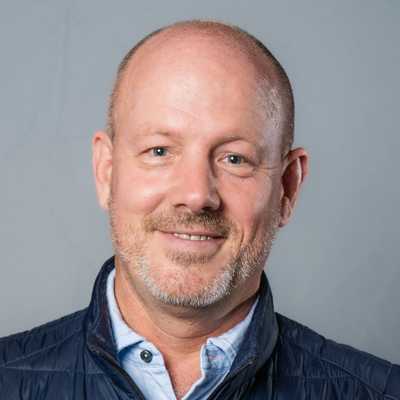

How to Align Your Purpose with Your Profession Before It’s Too Late
Richer Soul Podcast • Episode 488 • Florian Kemmerich
At 33 years old, Florian Kemmerich was running a healthcare corporation, had a thriving family, and had achieved everything society told him to want. He was successful by every traditional metric: money, status, power. Yet in a therapy session designed to help him communicate better with his team, his inner child delivered a devastating truth. “What you do makes no sense,” the younger version of himself said. “It’s not fulfilling, and I don’t think you’re up to what you should do.”
That moment cracked open Florian’s entire worldview and launched him on a journey that would span 25 years, four continents, nearly a billion dollars in impact capital, and ultimately, the creation of his book “On Vocation: How to Align Your Purpose with Your Profession.”
For small business owners making between one million and twenty five million dollars in revenue, Florian’s message is both comforting and unsettling. You might be making great money. You might have built something impressive. But are you actually living?
The Education We Never Got
Florian’s story begins not in the boardroom but in a small German village where he grew up as a sensitive outsider. His parents, a doctor and a teacher, gave him every advantage but also every pressure. When he was beaten up by local boys for being different, they enrolled him in judo to toughen him up. By age eighteen, he was preparing for the 1992 Barcelona Olympics. He had a coach, a path, a clear trajectory toward greatness.
Then he walked away.
“I didn’t see myself in the future,” Florian explains. “I didn’t have the vocation of a teacher. I had an amazing coach in judo, but I wasn’t going to make a living doing it.”
Instead, he followed his father’s earlier advice and got a “real job” in healthcare. For fifteen years, he climbed the corporate ladder. He was successful. He had the respect of his peers. He had the salary. But he was absent from his own life.
“My education gave me all the tools to make a living, but not to live my life,” Florian reflects. “Through my parents and through society, I got taught not to ask questions, to have discipline, to do a good job and be successful. Success meaning fame, fortune, and power. But all of that only nourished my ego.”
This is the core problem Florian identifies in modern business education and parenting. We teach young people what to think, not how to think. We teach them to chase external markers of success. We teach them to ignore their inner voice, the intuition that tells them whether something is actually right for them.
The result? Millions of talented people spending their most productive years building lives they don’t actually want.
The Danger of Deferred Living
When you ask successful business owners why they work so hard, they often say the same thing. “I’m building this now so I can enjoy life later.” They imagine early retirement, extended vacations, time with family. But Florian has observed a troubling pattern.
“You see this with sports people who win gold medals at the Olympics,” he explains. “And then after that, they fall off the cliff. Or artists going to drugs and other things. Or you see the midlife crisis of someone in their fifties, either going crazy in a midlife crisis or then actually asking yourself, okay, life is going on. What’s my purpose? I’m not doing what I really want to do.”
The problem with deferring your life is that life doesn’t wait. The energy you have at thirty five is not the same at fifty five. The relationships you could have built get missed. The curiosity you had gets dulled by years of compromise.
Worse, when the burnout finally comes, it often arrives with all your responsibilities still intact. You can’t simply quit. You have employees, a mortgage, a family counting on you. You’re trapped by your own success.
What Makes a Vocation Different from a Job
During our conversation, we explored the distinction between having a job, building a career, and living a vocation. The difference is fundamental.
A job is something you do for money. You trade your time for compensation. It’s transactional. There’s nothing wrong with a job, but the longer you pretend it’s something more, the more damage you do to yourself.
A vocation is something entirely different. It’s work that matters to you, that aligns with your inner values, that serves something greater than your own ego. When you have a vocation, you don’t have to justify it to anyone because you’re not doing it to perform or to nurture your ego.
Florian’s daughter became a doula after exploring several different paths in caregiving. She studied psychology, learned Reiki, tried working with children and elderly people, before finding what actually lit her up. “Her comment to me was, ‘Daddy, I cannot believe that I am paid to do this,'” Florian shares. “That’s the difference. When you’re in your zone, when what you do is greater than you, when it’s not catering to your ego, that’s when work becomes something else entirely.”
The Seven Step Method for Finding Your Vocation
Through his work with impact investing and organizational development, Florian has identified a structured approach to finding and building your vocation. The first step is understanding what you actually care about. Not what looks good on a business card. Not what will impress your friends. What genuinely, deeply matters to you?
The second step is recognizing your superpower. What are you naturally good at? What skills have you developed over your years in business? This is not ego. This is being honest about your assets.
The third step is identifying the sectors and communities where you could apply this combination of passion and skill. This is where many people get stuck because they can’t imagine how their talents translate outside their current industry.
An MBA student at Oxford University provided a perfect example. He was panicked about AI making his financial modeling skills obsolete. But when Florian asked him about his vocation, a different picture emerged.
“What I really, really care about is the adaptation of humanity to climate change,” the student said. “I’m worried about hurricanes, droughts, fires. I want to help people adapt.”
Suddenly, his financial skills weren’t useless. They were essential. Insurance companies need financial modeling expertise to understand climate risk. Food corporations need it to plan for agricultural disruption. Investment firms need it to price climate risk. A startup focused on climate solutions would need it.
“You have a vast possibility,” Florian told him, “because you now know what you want to contribute and what your superpower is to use it.”
The Role of Your Inner Child
One of Florian’s most powerful insights comes from therapeutic work with his coach. He calls it understanding your “inner child.” This is not about childishness. It’s about the part of you that has intuition, that knows what genuinely matters to you, that isn’t filtered through decades of “shoulds” and social conditioning.
When Florian sat in those two chairs and had a conversation between his adult self and his child self, the child delivered truth. The adult had built an impressive exterior. Smart, eloquent, successful. But the child saw through it. “That’s not what I want to be,” the child said.
This is crucial for business owners to understand. Your inner child is not looking for fame and fortune. The child is looking to contribute, to do something that matters, to feel fulfilled. The child is not ego driven because the child doesn’t fully understand ego yet.
But society teaches us to suppress this inner voice. We learn that feelings are unreliable, that emotions are weakness, that we need to toughen up and push through. For sensitive kids, the message is even stronger. Florian’s parents put him in judo specifically to make him less sensitive, to eliminate the part of him that felt things deeply.
This is tragedy on a mass scale. We are systematically teaching people to ignore the one thing that could guide them toward a meaningful life.
Purpose Is Not Helping
There’s a dangerous trap that Florian encountered in his own journey. During his time running a subsidiary in Mexico, he created a nonprofit foundation to serve vulnerable populations. He felt good about this. He was helping. He was giving back.
Then he attended a surgical program in the jungle helping indigenous people with cleft lip surgeries. He took photos. He felt amazing. He put the story in the newsletter. But six months later, he learned that the child he had photographed had died from an infection. There was no follow up care. There was no sustainable system.
“I learned that I’m not helping because I come privileged,” Florian reflects. “I show up, I do good and I leave. If I actually didn’t invest myself, I’m not there to serve. That struck me so hard.”
This is the difference between charity and actual service. True purpose is not about making yourself feel good through helping others. It’s about being in genuine service to others, understanding their actual needs, investing yourself in sustainable solutions.
When you’re building a business with the intention of making a difference, this matters enormously. Are you solving a real problem for real people? Or are you solving a problem you’ve decided they have?
AI, Human Agency, and the Future of Work
As our conversation turned to artificial intelligence, Florian expressed a concern that every business owner should take seriously. AI will not rescue you from having to figure out your purpose. In fact, it will make the problem worse.
“If we continue our education the archaic way on the past, only with external references, AI will only exacerbate that,” he explains. “Everybody will ask the machine, where do I go? What do I study? How can I make more money? How can I protect it? It’s all catered outside.”
The risk is that we abdicate human agency entirely. We let the machine tell us what to do, how to think, what career to pursue. We lose the capacity to listen to ourselves.
But AI can also be leveraged in the opposite direction. Instead of asking the machine for answers, you can use it as a thought partner to understand yourself better. You can ask it to identify patterns in your thinking. You can use it to explore your values more deeply. You can challenge its conclusions and force it to explain its reasoning.
The key is intention. Do you have human agency, or are you outsourcing your decision making?
The Real Measure of Success
Florian offers a final definition of success that should make every business owner pause and reflect. “Success is the way you live and love in life. Not your image, not your money, or the power you have.”
This is not a suggestion to abandon business or profit. It’s a suggestion that profit is a means, not an end. The real question is what you’re profiting toward. What is the life you’re building the business to support?
For many business owners, the answer has become unclear. They built the business to create freedom, but instead it created prison. They built it to support their family, but instead it consumed the time they could have spent with family.
The good news is that it’s never too late to ask the question. It’s never too late to listen to your inner child. It’s never too late to start aligning your profession with your actual purpose.
The sooner you start, the more of your life you get to actually live.
Meet Florian Kemmerich
Florian Kemmerich is an impact investor, serial entrepreneur, purpose strategist, and global keynote speaker who helps individuals and institutions align purpose with profession to drive systemic impact. He is the author of On Vocation: How to Align Your Purpose with Your Profession (Routledge, 2025), introducing “vocating”—a structured seven-step method for building a vocation that supports personal fulfilment and societal transformation.
Over 25+ years across Europe, the Americas, Africa, and Asia, he has mobilised nearly $1B in impact capital and co-founded Human Planet and Resilienture—ventures advancing climate resilience, humanitarian innovation, and innovative finance. He has lectured and facilitated at Oxford Saïd, IMD’s Executive MBA, the YPO Global Impact Summit, and more, leading “On Vocation” workshops on purpose, resilience, and impact-driven leadership.
A former paratrooper, multilingual communicator (German, English, Spanish, French, Italian), father of five, and musician at heart, Florian blends personal development, strategy, systems thinking, and impact investing. His journey from bullied outsider to judo champion to international impact investor underpins his leitmotif: “Impact Lives, Share Profits.”
Links
Website: https://on-vocation.com/
LinkedIn: https://www.linkedin.com/in/floriankemmerich/
Facebook: https://www.facebook.com/florian.onvocation
Instagram: https://www.instagram.com/flokemmerich
YouTube: https://www.youtube.com/@FloKemmerich
Watch the full episode on YouTube: https://www.youtube.com/@richersoul
Richer Soul Life Beyond Money. You got rich, now what? Let’s talk about your journey to more a purposeful, intentional, amazing life. Where are you going to go and how are you going to get there? Let’s figure that out together. At the core is the financial well being to be able to do what you want, when you want, how you want. It’s about personal freedom!
Thanks for listening!
Show Sponsor: http://profitcomesfirst.com/
Schedule your free no obligation call: https://bookme.name/rockyl/lite/intro appointment 15 minutes
If you like the show please leave a review on iTunes: http://bit.do/richersoul
https://www.facebook.com/richersoul
Some music provided by Junan from Junan Podcast
Any financial advice is for educational purposes only and you should consult with an expert for your specific needs.
Podcast: Play in new window | Download
Subscribe: RSS

0 Comments