
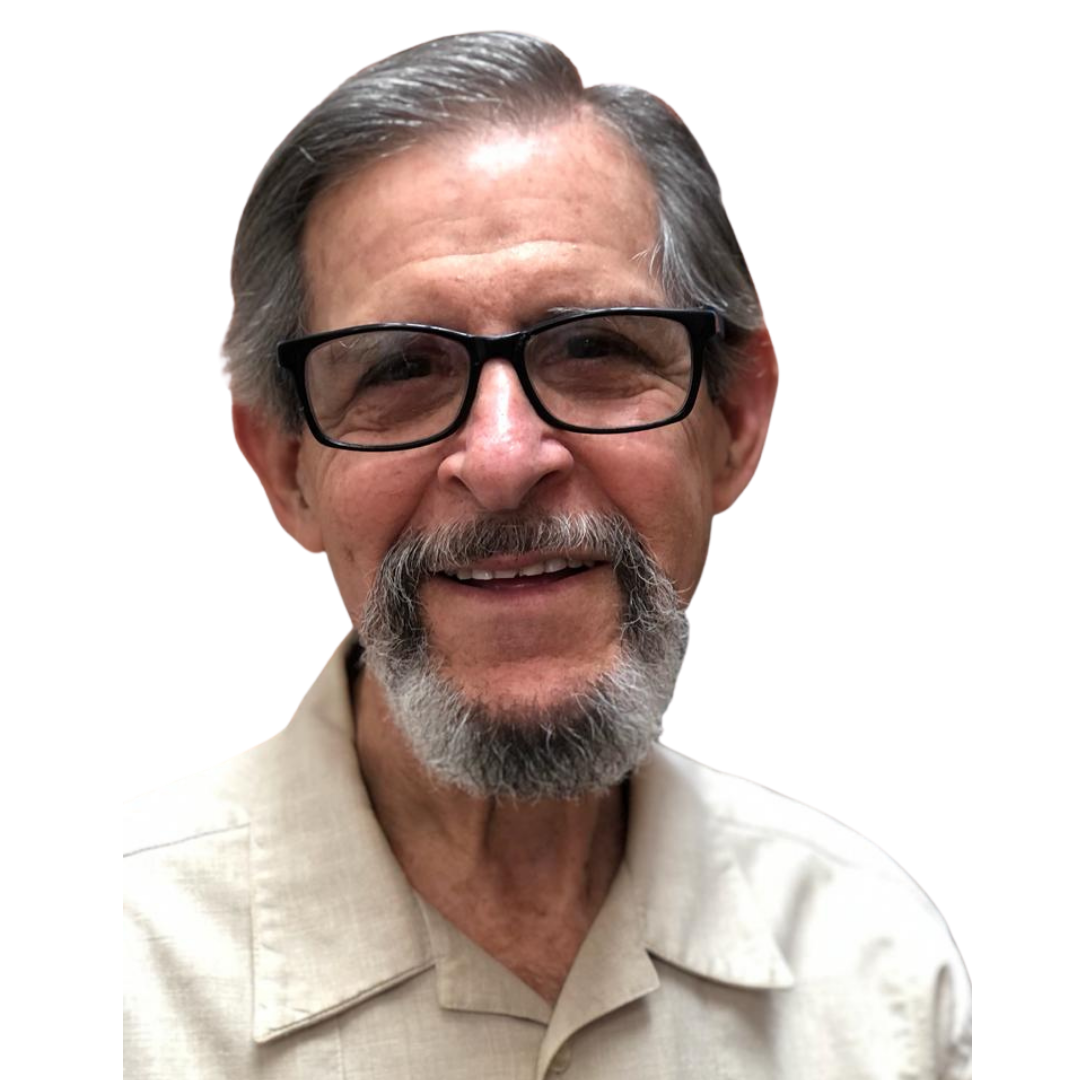

What an 83-Year-Old’s Daily Habits Reveal About Aging
Richer Soul Podcast • Episode 505 • Michael Dorfman
Most of us have a quiet assumption baked into how we think about getting older. Somewhere around 70, the body starts breaking down. Chronic illness becomes likely, then expected, then almost routine. We brace for it the way we brace for bad weather, not because we chose it but because we’ve been told it’s coming.
Michael Dorfman doesn’t buy that story, and at 83, he’s living evidence against it.
Michael is a certified Health & Nutrition Life Coach based in San Miguel de Allende, Mexico, and the author of The Longevity Wellness Revolution and The Thriving Vegan. He plays competitive pickleball several times a week, writes and publishes regularly, and describes himself not as someone hoping to be healthy one day, but as someone who already considers himself thriving. When he sat down with Rocky Lalvani for this episode of Richer Soul, the conversation moved well past diet tips into something more unsettling and more useful: a reframe of when illness actually begins.
Why Chronic Disease Doesn’t Start the Year It’s Diagnosed
The central idea Michael returns to throughout the episode is simple but easy to ignore. Chronic disease is not something that suddenly appears in your 70s. It has usually been developing for decades, quietly, before it becomes loud enough to be detected by a test or a symptom.
He points to evidence of this shift happening in real time. Type 2 diabetes, once almost unheard of in children, is now common. Colon cancer, once rare in men under 50, has become far more prevalent in younger adults. These aren’t isolated anomalies. They’re signals that whatever is driving chronic illness is starting earlier than the conventional medical narrative suggests, and that the disease itself was likely accumulating long before any of these younger patients felt sick.
This reframe matters because it shifts the responsibility, and the opportunity, earlier. If a 75 year old’s heart disease was forming in their 40s and 50s, then the real window for prevention isn’t retirement. It’s right now, whatever age you happen to be reading this.
A Friend’s Diagnosis That Changed Everything
Michael’s interest in longevity wasn’t originally about teaching anyone else. He had been plant-based since giving up dairy in 2008, after reading T. Colin Campbell’s The China Study and learning about the connection between casein, the primary protein in cow’s milk, and tumor growth in laboratory studies. He felt better. He stopped getting sick multiple times a year, something that had quietly plagued him even during his earlier years as a vegetarian.
But it was a friend’s diagnosis that turned a personal health choice into a mission. A close friend named Beatrice had a heart attack, underwent quadruple bypass surgery, and seemed to recover. A year later, when doctors found new blockage and determined a stent wasn’t possible because the replacement vein had narrowed too much, they sent her home. What they told Michael’s wife, who had accompanied her, was that Beatrice had roughly six months to live.
Michael gave her a book: Prevent and Reverse Heart Disease by Dr. Caldwell Esselstyn, a former chief of staff and surgeon at the Cleveland Clinic who had spent years documenting a roughly 95 percent success rate reversing severe cardiovascular disease through a strict whole-food, plant-based protocol. Beatrice made the change. Instead of six months, she lived almost ten years.
For Michael, this wasn’t an abstract statistic. It was someone he knew, watching a six-month death sentence become a decade of life through one change. It raised an uncomfortable question he couldn’t let go of: if this protocol works this well, why isn’t it the default response after heart surgery, instead of, as Michael notes wryly, a hospital meal of bacon and eggs delivered to a patient who had just survived a heart attack?
What Doctors Are Actually Trained to Do
That question led Michael to a broader observation that runs through the entire conversation. Doctors, by and large, are trained to treat disease, not to prevent it. A surgeon’s expertise is surgery. The default response in Western medicine tends toward pharmaceutical management of symptoms rather than lifestyle intervention aimed at root causes.
This isn’t a condemnation of doctors so much as an honest accounting of what their training actually covers. The implication, as Michael frames it, is that the responsibility for prevention sits primarily with the individual. Waiting for a doctor to proactively teach you how to avoid chronic disease is, in his view, waiting for a kind of guidance the system was never built to deliver at scale.
What the Blue Zones Actually Found
Michael’s thinking is also shaped heavily by the Blue Zones research, the work led by Dan Buettner and National Geographic starting around 2008, which identified five regions around the world with unusually high concentrations of long-lived, healthy people: Okinawa in Japan, Sardinia in Italy, Icaria in Greece, Loma Linda in California, and Nicoya in Costa Rica.
The interesting part isn’t just that these populations lived long. It’s what they had in common despite being separated by oceans and entirely different cultures. Diets leaning heavily plant-based, though rarely 100 percent so. Movement built into daily life rather than scheduled as formal exercise. A sense of purpose that gave people a reason to get up in the morning. Strong, in-person community.
Michael is careful to note that none of this requires moving to a Blue Zone. The principles, not the geography, are what matter. As Rocky put it during the conversation, you don’t have to live in a Blue Zone to live like one.
Fiber, Not Protein, Is the Real Gap
One of the more counterintuitive points Michael makes concerns protein anxiety, a near-universal concern among people considering plant-based eating. His argument, backed by examples ranging from elite athletes to some of the strongest animals on the planet, is that protein is rarely the actual deficiency. Fiber is.
Fiber feeds the gut microbiome, the trillions of bacteria living in the digestive tract that ferment fiber into short-chain fatty acids like butyrate and acetate, which in turn strengthen the colon and support immune function. Michael notes that an estimated 95 percent of people don’t get even the minimum amount of fiber recommended for basic health, let alone optimal longevity. Most standard American diets are heavy in ultra-processed foods, which strip out fiber while adding additives designed primarily to extend shelf life rather than nutritional value.
The Daily Practices That Aren’t About Diet
Beyond food, Michael described a set of practices he’s added in recent years specifically to support healthy aging: breathwork to calm the nervous system, particularly in the evenings when sleep becomes harder with age; intermittent fasting, which he practices most mornings; and intentional exposure to cold and heat as a way of, in his words, challenging the body to remain resilient.
He’s also direct about something less tangible but, in his telling, just as important: purpose. Having a reason to get up in the morning, something that matters enough to engage with fully, is something he considers essential to vitality in later life, not a nice-to-have.
Letting Go of Judgment
The conversation closes on something more personal. Asked what he learned later in life that he wishes he’d learned sooner, Michael didn’t talk about diet or supplements. He talked about judgment, specifically the judgment he held against his own father for years, believing him less affectionate than his mother. It was only later that Michael came to understand what his father had actually lived through: escaping Russia during the revolution, surviving the Depression, serving during World War II, and being exposed to asbestos while painting ship hulls in the Brooklyn Navy Yard, an exposure that led to the cancer that eventually took his life decades later.
That understanding reshaped how Michael relates to people generally, including people he disagrees with. As he put it, people are people. Most of us want similar things: to feel well, to be loved, to have community, to not have to scramble for our next meal. The differences that seem to divide us are often smaller than they appear once you actually get to know someone.
Rocky’s Perspective
What stands out most listening to Michael isn’t any single protocol. It’s the consistency of the underlying belief: that the body is responsive, even decades into a pattern, and that the choice to change course is available at almost any age. Michael isn’t an outlier because of unusual genetics. He’s an outlier because he made a series of deliberate, sustained decisions starting in his 60s and 70s that most people assume only matter if you start in your 20s.
There’s also something worth sitting with in how Michael frames his own identity. He doesn’t describe himself as working toward health. He describes himself as already thriving, today, in his 80s. That’s a mindset shift available to anyone, regardless of age or starting point.
One Question to Sit With
If a chronic disease was quietly forming inside you right now, today, and you wouldn’t know until it got loud enough to detect, what would you change while you still have the choice?
Conclusion
Michael Dorfman’s story isn’t really about plant-based eating, even though that’s the practice he returns to most often. It’s about the decision to stop waiting for permission, a diagnosis, or a doctor’s prompting to take aging seriously. At 83, he’s not slowing down. He’s proof that the timeline most of us assume is fixed, isn’t.
About Michael Dorfman
Michael J. Dorfman is an 83-year-old certified Health & Nutrition Life Coach, investigative author, and thriving example of plant-based longevity. Based in San Miguel de Allende, Mexico, he has spent the last 17+ years living—and coaching—on how to age vibrantly without chronic disease. Michael adopted a vegetarian diet in 1976, transitioned to a whole-food, plant-based lifestyle in 2008, and earned his certification in Plant-Based Nutrition in 2019. His book, The Thriving Vegan, exposes how the food and pharmaceutical industries mislead the public—and how individuals can reclaim their health. In his latest book, The Longevity Wellness Revolution, Michael shares practical tools from the Blue Zones, as well as his discoveries, including breathwork, intermittent fasting, stress reduction, and more. He’s passionate about showing that it’s never too late to live with energy, purpose, and joy.
Links
Website: https://longevitywellnessrevolution.com/
Facebook: https://www.facebook.com/michael.dorfman.353/
Instagram: https://www.instagram.com/thrivingvegan1/
Substack: https://substack.com/mike82
Watch the full episode on YouTube: https://www.youtube.com/@richersoul
Richer Soul Life Beyond Money. You got rich, now what? Let’s talk about your journey to purposeful, intentional, amazing life. Where are you going to go and how are you going to get there? Let’s figure that out together. At the core is the financial well being to be able to do what you want, when you want, how you want. It’s about personal freedom!
Thanks for listening!
Show Sponsor: http://profitcomesfirst.com/
Schedule your free no obligation call: https://bookme.name/rockyl/lite/intro appointment 15 minutes
If you like the show please leave a review on iTunes: http://bit.do/richersoul
https://www.facebook.com/richersoul
Some music provided by Junan from Junan Podcast
Any financial advice is for educational purposes only and you should consult with an expert for your specific needs.
Podcast: Play in new window | Download
Subscribe: RSS

0 Comments