


Your Childhood Wrote Your Leadership Code (Now Rewrite It)
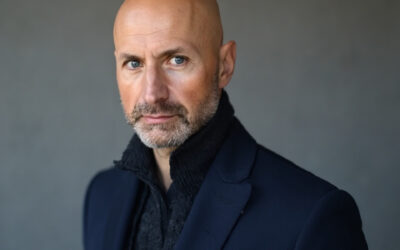
Richer Soul Podcast • Episode 482 • Featuring Nik Kinley
If you’ve ever left a leadership training inspired, then returned to work and found yourself doing the same old things, you’re not alone. In this episode of Richer Soul, host Rocky Lalvani sits down with psychologist, author, and leadership assessor Nik Kinley to unpack why real change is so hard, why leaders run on “automatic” so much of the day, and how childhood programming (and even genetics) can shape the way we lead under pressure.
This conversation goes far beyond generic leadership advice. Nik explains the mechanics of behavior: what’s instinctive, what’s learned early, what power does to our psychology, and how uncertainty in the modern world makes default patterns even more likely to take over. Most importantly, he shares practical ways to create better information flow so leaders don’t drift into “average” without noticing.
Episode highlights at a glance
Here are a few of the big ideas you’ll hear in this interview:
- Leaders estimate about 72% of their day is spent running on automatic, especially when moving fast from meeting to meeting.
- Some traits (like emotional expressiveness / self-regulation) may be 60–70% genetically inherited, even before environment and epigenetics enter the picture.
- Many adult conflict defaults can be grouped into three patterns: smooth it over, pull away, or go in swinging, and these tendencies form early.
- Nik argues we’ve moved from episodic volatility to “structural uncertainty” after COVID, uncertainty baked into the system, making strategic drift harder to fight.
- A surprising leadership dynamic: perception of intelligence can predict success better than intelligence itself, pushing leaders toward “performance” and image-management.
- A practical behavior shift: speaking in probabilities (e.g., “I’m 60% sure”) can invite candor and help teams surface risk sooner.
The 72% leadership autopilot problem
Nik shares research from his work with leaders: when asked how much of their day is spent running on automatic, leaders estimated 72%. Think about what that means. In a calendar packed with back-to-back meetings, urgent decisions, and constant context-switching, you’re not leading from your best thinking—you’re leading from your defaults.
That’s why so many leadership programs don’t “stick.” In the classroom, leaders can be reflective, calm, and deliberate. But at work, under time pressure and uncertainty, the reflective version disappears, and the automatic version takes over. Nik’s point is not that “instinct is bad.” Sometimes instinct works brilliantly. The risk is that you’re rolling the dice, again and again, without realizing it.
And when it doesn’t work, the failure is rarely dramatic. Most leaders don’t fail in a fireball. They slowly drift into average through what Nik describes as a “death of a thousand cuts”, small misreads, slightly wrong responses, minor breakdowns in trust, and missed opportunities that accumulate over months and years.
Your childhood programming doesn’t stay in childhood
A major theme of the episode is that leadership is not just a set of skills; it’s also a set of deeply conditioned responses. Nik describes how early life experiences can shape:
- What you pay attention to (risk, threat, optimism/pessimism)
- How you regulate emotion (poker face vs. highly readable)
- How you respond socially under pressure (especially conflict)
One of the most “sticky” takeaways is that some of these tendencies form incredibly early, before school, and can even be influenced by family scripts that travel across generations. Nik calls these intergenerational patterns “family scripts” and suggests we often inherit them by observation long before we have language for them.
Nik also points out something many parents find sobering: certain emotional traits may be 60–70% genetically inherited. That doesn’t erase the environment, but it does challenge the assumption that everything about temperament is “down to parenting.”
The 3 conflict styles: smooth, withdraw, or swing
Conflict is one of the fastest ways to reveal someone’s defaults.
Nik groups common conflict responses into three broad patterns:
- Smooth it over (keep the peace, apologize quickly, reduce tension)
- Pull away (step back, observe, detach)
- Go in swinging (push forward, confront, escalate)
Most people can do all three at times—but we typically have a default stance that shows up under stress. And importantly, Nik suggests these defaults are shaped early by the family environment and by what we observe between our parents as much as what we experience directly.
For business owners and leaders, this matters because your conflict style becomes part of your organizational culture. Teams learn what happens when there’s disagreement: Does it get smoothed away? Avoided? Or turned into a fight? Your default teaches them whether it’s safe to speak up—especially about risk.
Structural uncertainty: why leadership feels harder now
Nik makes a compelling argument that we’ve shifted from “episodic volatility” to structural uncertainty, uncertainty baked into the system, particularly in the post-COVID world. Instead of volatility spiking and then settling, uncertainty keeps coming, compounding its effects.
His point isn’t only economic, it’s psychological:
- Uncertainty increases threat sensitivity
- Threat sensitivity increases caution and risk aversion
- Cognitive load goes up, leaving less capacity for deliberate decision-making
- Instinct and autopilot take over more often
In that environment, Nik suggests the leadership requirement evolves. It’s not just “be agile in the moment.” It becomes: maintain strategic grip over time and fight strategic drift inside the organization.
The “Power Trap”: the hidden costs of being in charge
Nik’s book The Power Trap focuses on what power does to people, not just presidents and celebrities, but anyone with authority: executives, managers, and even family leaders.
He highlights two major risks that come “built-in” to leadership roles:
1) Power creates distance
As soon as you become “the boss,” people filter what they tell you. Complete openness is a myth. Even in healthy cultures, power changes conversations. People choose words carefully. They hold back. They try to stay inside “acceptable responses.”
Nik also notes that across metrics studied, the higher people rise in organizations, the less empathy they tend to have for those they lead, something no leader wants to hear, but which makes sense if you accept the distance effect.
2) Power boosts ego
Power feels good. It increases confidence and can tip into overconfidence. When you layer in an image-driven environment (where performance and perception matter), you can intensify ego inflation and reduce truth-telling even further.
The result is a leadership trap: less truth coming in, and more certainty going out, right when uncertainty is already making decision quality harder.
Perception vs. reality: why “seeming smart” can beat being smart
One of the most provocative moments in the interview: Nik shares research suggesting that perception of intelligence is a better predictor of performance than intelligence itself.
This is not a celebration of superficiality; it’s a warning sign. When perception matters more than reality, leadership becomes more about performance: saying the right things, avoiding the wrong things, crafting an image, and signaling certainty.
And that creates an unhealthy incentive: leaders may prioritize looking confident over thinking clearly, and “winning the room” over hearing uncomfortable data.
A practical leadership tool: speak in probabilities to invite candor
A standout actionable tip from Nik’s research: instead of talking like you’re 100% sure, talk in probabilities.
For example:
- “I’m 60% certain this will happen because of X and Y.”
- “If it doesn’t happen, here’s what we’ll do.”
In the studies Nik describes, when leaders spoke this way, team members were more likely to voice uncertainty in response, surfacing risk earlier and improving decision quality.
This is crucial: great leadership isn’t always about sounding certain. Nik draws a difference between clarity and certainty. You can be clear about direction while still being honest about what you don’t know.
Why “good leader” is the wrong question
Another key idea: Nik doesn’t assess whether someone is a “good leader.” He assesses whether they can do a specific role in a specific environment at a specific time.
This is a powerful reframing for hiring, promotion, and founder self-awareness. Context matters. Stakeholders matter. The company’s investment thesis (especially in private equity), team dynamics, and hidden “off-the-job-description” expectations determine whether someone thrives or slowly becomes average.
Listen to the Full Conversation
Ep 482 Your Childhood Wrote Your Leadership Code (Now Rewrite It) | Nik Kinley:https://richersoul.com/ep-482-your-childhood-wrote-your-leadership-code-now-rewrite-it-nik-kinley/
If this episode resonated, share it with one leader or business owner who’s navigating pressure and uncertainty—and wants to lead more consciously instead of on autopilot.
Guest Bio
Nik is a London-based psychologist, psychotherapist, leadership consultant and coach with over 35 years’ experience, specialising in assessment and behaviour change. His career spans commercial roles, senior HR positions at BP and Barclays, consulting with YSC and Accenture, and a decade working as a forensic psychotherapist in prisons. He thus has the unique experience of having worked with royalty, criminals, CEOs, politicians and children. He has assessed over 1,500 senior leaders worldwide, coached CEOs and leadership teams across sectors, and led global culture-change programmes in some of the worlds largest companies. An author and media commentator, interviewed by the likes of the BBC and The Economist, he has for the last 12 years led a research programme that has resulted in nine books, the latest of which is The Power Trap (2025).
Links:
Website: https://nikkinley.com
LinkedIn: www.linkedin.com/in/nikkinley
Substack: https://nikkinley.substack.com
Watch the full episode on YouTube: https://www.youtube.com/@richersoul
Richer Soul Life Beyond Money. You got rich, now what? Let’s talk about your journey to more a purposeful, intentional, amazing life. Where are you going to go and how are you going to get there? Let’s figure that out together. At the core is the financial well-being to be able to do what you want, when you want, how you want. It’s about personal freedom!
Thanks for listening!
Show Sponsor: http://profitcomesfirst.com/
Schedule your free no obligation call: https://bookme.name/rockyl/lite/intro-appointment-15-minutes
If you like the show please leave a review on iTunes: http://bit.do/richersoul
https://www.facebook.com/richersoul
Some music provided by Junan from Junan Podcast
Any financial advice is for educational purposes only and you should consult with an expert for your specific needs.
Podcast: Play in new window | Download
Subscribe: RSS


0 Comments