
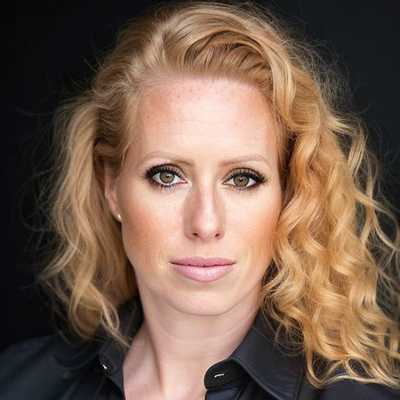

The Armor That Made You Successful Is Holding You Back
Richer Soul Podcast • Episode 490 • Victoria Pelletier
What if the very thing that got you to the top is the thing keeping you from going any further?
It is a question most high achievers never think to ask. The discipline, the drive, the thick skin, the ability to push emotion aside and execute, these are the traits that build careers. They earn promotions. They win respect. And over time, they harden into something that feels like identity but is actually armor.
Victoria Pelletier knows this firsthand. Born to a drug-addicted teenage mother who was abusive, Victoria was adopted into a loving but financially struggling family. Her adoptive mother told her at ten or eleven years old: “Tori, you need to do better than us.” That single sentence became a lifeline. Victoria started working at eleven, held her first leadership role at fourteen, bought her first house at nineteen, and became a Chief Operating Officer at twenty-four.
By every conventional measure, she had made it. But there was a cost she had not yet calculated.
The Iron Maiden and the Mask of Success
When Victoria stepped into her first executive role at twenty-four, she was the youngest person in the room by two decades and the only woman. She did what many high achievers do in that situation: she built a mask. No vulnerability. No emotion. No personal backstory. All business, all the time.
It worked. She earned the nickname “Iron Maiden,” and at first, she took it as a compliment. She thought it reflected her ability to make tough business decisions and deliver strong results.
Then a colleague told her the truth. The nickname was not about her business acumen. It was because people thought she was devoid of emotion.
That moment forced a reckoning. Victoria realized she had built a persona so effective at protecting her that it had become a wall between her and the people she led. Her teams followed her because she gave clear direction, but as she put it herself, they would not have followed her into the proverbial fire.
This is the trap so many driven leaders fall into. The armor that makes you appear strong quietly erodes the trust, connection, and psychological safety that real leadership requires. You get compliance. You do not get commitment.
Redefining Success When the Old Definition Stops Working
For years, Victoria defined success by hierarchy, status, and the wealth that came with climbing. It is a definition that makes sense when you grow up with nothing. When your parents declared bankruptcy twice. When the drive to never worry about money is the engine behind every decision.
But at some point, she arrived. And arriving forced a different question: now what?
The shift came through two forces. The first was professional. Victoria began to find that what inspired her most was not her own advancement but developing leaders behind her, being the kind of leader she wished she had encountered earlier in her career. She had good leaders along the way but never one she would call a true mentor. Many were examples of what not to do. That gap became her fuel.
The second force was deeply personal. Her ex-husband was diagnosed with cancer while she was pregnant with their youngest child. He passed away almost thirteen years ago. That experience drove home a truth she had heard but never fully absorbed: your health is your wealth.
Victoria’s definition of success shifted from titles and compensation to legacy. As she described it: “What do I want people to say about me when I die? Did I leave the workplace, the community, and the world a better place than when I came in? Did I raise two really good human beings?”
She is clear that this does not mean she stopped driving hard professionally. She still does. But she no longer defines herself by it. The ambition remains. The identity has changed.
Whole Human Leadership and the Courage to Be Seen
Victoria calls her evolved approach “whole human leadership.” At its core, it is the recognition that leaders are whole humans, carrying a full range of experiences, emotions, and personal realities into every room they enter. And so are the people they lead.
This sounds obvious until you look at how most organizations actually operate. Command-and-control leadership still dominates. Employees are expected to check their personal lives at the door on Monday morning. Vision, mission, and values statements hang on walls and populate onboarding decks but rarely translate into the daily behaviors and decisions that people actually observe.
Victoria made a pointed observation during our conversation: “The exceptions you make are what people are watching.” It does not matter what is written in the handbook. When leadership lets a top performer violate the stated values without consequence, every person on that team updates their understanding of what the company actually believes.
The shift to whole human leadership was not easy for Victoria. She described it as a multi-year process of strategic intentionality, her term for deliberately and planfully changing how she showed up. She started letting people see her emotions. She began sharing her story. She stopped diving immediately into the business agenda in every interaction. It was uncomfortable. It took years before it felt natural.
But the results were undeniable. Stronger followership. Deeper client trust. The kind of relationships where CEOs and senior leaders let her hold up the mirror and tell them what they needed to hear rather than what they wanted to hear. That is how she earned the title “CEO Whisperer.”
The False Choice Between Right and Rich
One of the most striking moments in our conversation came when Victoria shared something a friend had asked her: “Do you want to be right or do you want to be rich?”
Many leaders treat this as a genuine either/or. They stay silent on ethical concerns because speaking up might jeopardize their position or their earnings. Victoria rejected the premise entirely. Her response: you can be both. She refuses to sit in silence over something she believes is right just because staying quiet might be more profitable.
This is the tension that so many successful people navigate quietly. The pressure to optimize for financial results quarter by quarter, often at the expense of employees, culture, and long-term durability. Victoria sees it constantly in her work with C-suite leaders. They focus on one thing, financial performance, and treat everything else as secondary. She argues that this is a false trade-off and that the leaders who integrate values with results build something far more enduring.
It requires courage. It requires the willingness to be a truth-teller in rooms full of people who would rather hear agreement. But Victoria’s career is proof that radical candor from a place of care and compassion, not cruelty, builds a kind of authority that compliance never can.
AI, Fear, and the Danger of Corporate Excuses
Our conversation also turned to a topic dominating every boardroom right now: artificial intelligence. Victoria works inside this space daily at a large global technology company, helping clients navigate workforce transformation and AI adoption.
Her perspective was refreshingly honest. She stated plainly that many companies are using AI as a blanket justification for layoffs that are actually about correcting workforce bloat from the COVID era. Most of the organizations she works with do not yet have a wholesale AI strategy implemented, let alone one mature enough to justify the scale of reductions being announced.
The real impact of AI is coming. Victoria is clear about that. Tasks will be automated. Roles will change. New job architectures will need to be built. But the timeline is six to eighteen to twenty-four months for most organizations to bring meaningful AI transformation into production at scale. The fear, she argued, is outpacing the reality.
What concerns her most is what is being underestimated: the human skills that will be amplified, not replaced. Problem-solving. Empathy. Critical thinking. The ability to handle situations too complex or too emotionally charged for any automated system. The World Economic Forum’s future of skills research reinforces this, placing empathy and adaptability alongside data and AI skills as essential for 2030.
And she raised a question that stuck with me: if companies stop hiring entry-level workers today, who will understand the processes and institutional knowledge behind the AI systems five or seven years from now?
Rocky’s Perspective
What struck me most about this conversation is how universal Victoria’s story really is. She is talking about the armor high achievers build, and I see it everywhere. In entrepreneurs who cannot delegate because they do not trust anyone to care as much as they do. In executives who think showing emotion will cost them credibility. In business owners who measure their worth by the next revenue target.
I have always believed that kids do not listen to what you say. They listen to what you do. And I think employees are exactly the same. The culture you claim means nothing next to the culture you demonstrate. The exceptions you tolerate become the standard you set.
Victoria’s shift from Iron Maiden to CEO Whisperer is not just a leadership story. It is a human story about what happens when you finally let people see who you actually are and discover that the real you was more powerful all along.
One Question to Sit With
If the armor that made you successful is the same thing holding you back, what would it look like to finally take it off?
Conclusion
Victoria Pelletier started working at eleven, led at fourteen, and ran a company at twenty-four. She earned every marker of success and then had the courage to ask whether the person who earned it all was the person she actually wanted to be. The answer changed everything.
The armor is not the enemy. It served its purpose. But knowing when to set it down might be the most important leadership decision you ever make.
Meet Victoria Pelletier
Award-winning executive leader, #1 best-selling author, in-demand professional public speaker, corporate executive, board director, entrepreneur, #1 social seller/public brand worldwide per LinkedIn for her F500 employers, sought out for discussions on motivation, Diversity Equity & Inclusion, women in leadership, culture, workforce, and more.
“Unstoppable and Dynamic: Born to lead and not to be led.”
Overcoming adversity and trauma at an early age built resilience. A trait that has remained with her throughout her life and has helped Victoria excel as a corporate executive, mentor and leader — for which she is often characterized as dynamic and unstoppable.
Links
Latest TEDx talk on Healthy Resilience:
https://www.youtube.com/watch?v=xFpknOCFMOg
Website: https://victoria-pelletier.com/
LinkedIn: https://www.linkedin.com/in/victoriapelletier/
Facebook: https://www.facebook.com/Victoria.Pelletier.Unstoppable/
Instagram: https://www.instagram.com/victoria_pelletier_unstoppable/?hl=en
YouTube: https://www.youtube.com/@VictoriaPelletierUnstoppable
ESpeaker: https://www.espeakers.com/marketplace/profile/49372/victoria-pelletier
Watch the full episode on YouTube: https://www.youtube.com/@richersoul
Richer Soul Life Beyond Money. You got rich, now what? Let’s talk about your journey to purposeful, intentional, amazing life. Where are you going to go and how are you going to get there? Let’s figure that out together. At the core is the financial well being to be able to do what you want, when you want, how you want. It’s about personal freedom!
Thanks for listening!
Show Sponsor: http://profitcomesfirst.com/
Schedule your free no obligation call: https://bookme.name/rockyl/lite/intro appointment 15 minutes
If you like the show please leave a review on iTunes: http://bit.do/richersoul
https://www.facebook.com/richersoul
Some music provided by Junan from Junan Podcast
Any financial advice is for educational purposes only and you should consult with an expert for your specific needs.
Podcast: Play in new window | Download
Subscribe: RSS


0 Comments