


Stop Doing Everything Yourself: How AI and the 10-80-10 Rule Free Business Owners to Scale
Richer Soul Podcast • Episode 484 • Scott Abbott
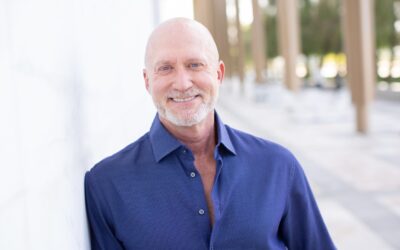
In the modern landscape of entrepreneurship, the pressure to “do it all” is overwhelming. Business owners often find themselves trapped in the daily grind of operations, leaving little time for the strategic vision and human connection that actually drive growth. In Episode 484 of the Richer Soul podcast, host Rocky Lalvani sits down with Scott Abbott, a veteran entrepreneur, investor, and business coach—to dismantle the myths holding leaders back.
From the fallacy of work-life balance to the transformative power of Artificial Intelligence, Abbott shares a masterclass on how to build resilient companies. His philosophy is simple yet profound: you must systematize the predictable to humanize the exceptional. By leveraging frameworks like the 10-80-10 rule, leaders can reclaim their time, scale their businesses, and find true harmony in their lives.
The 10-80-10 Rule Explained
One of the most actionable frameworks Abbott introduces is the 10-80-10 rule, a modern adaptation of the Pareto Principle (80/20 rule) designed for the age of AI and automation. This rule is the key to escaping the operational trap that ensnares so many founders.
Most business owners spend 85% to 90% of their lives stuck in the “middle”, the daily grind of production, shipping, and inventory. Abbott argues this is a waste of a leader’s unique potential. Instead, he proposes a new division of labor:
The Initial 10% (Innovation): This is the “front end” where the business owner provides unique value. It involves innovation, business development, marketing, vision setting, and personal connection, what Abbott describes as “shaking hands, rubbing elbows, and kissing babies.”
The Middle 80% (Routine Operations): This represents the bulk of the work, production, administration, and execution. Abbott asserts that this is where AI is blossoming. Through the use of a capable team, robust systems, and AI tools, this middle 80% should be handled automatically or systematically, freeing the owner from manual labor.
The Final 10% (Culture and Connection): The owner returns for the “back end” to ensure quality and humanity. This involves coaching people, mentoring the team, and building the organizational culture.
By applying this rule, entrepreneurs move from working in the business to working on the business, ensuring they are focused only on the high-value tasks that drive growth and connection.
Work-Life Harmony vs Balance
A recurring theme in modern discourse is the elusive “work-life balance.” Abbott is quick to dismantle this concept, calling it a static myth. He argues that trying to “balance” life is like standing on a teeter-totter; it is rigid, stressful, and ultimately impossible to maintain in the real world.
Instead, Abbott advocates for harmony. Unlike balance, harmony is about integration, rhythm, and flow. It acknowledges that life is dynamic; sometimes professional demands are high, and sometimes personal needs take precedence. The goal is not equality, but a pleasing combination.
To illustrate this, Abbott uses several vivid metaphors:
- Music: In a great song, the levels are never static. Sometimes the treble is up, sometimes the bass is down, but together they create a cohesive sound.
- A Meal: A great dish isn’t about equal amounts of every ingredient. Sometimes it has a little more spice, sometimes it’s more subtle, but the flavors work together.
- Garrett’s Popcorn: He specifically references the famous “Chicago Mix” which blends cheddar and caramel corn. On paper, these two flavors shouldn’t work together, but in reality, they create an “awesome” integration that is better than the sum of its parts.
By seeking harmony rather than balance, leaders can stop feeling guilty about the inevitable fluctuations of life and instead focus on finding a sustainable “groove” between their systems and their purpose.
AI as Your Co-Pilot
In the 10-80-10 framework, the “middle 80%” is largely powered by technology. Abbott views Artificial Intelligence (AI) not as a replacement for human ingenuity, but as a mandatory “co-pilot” and “ally.”
He describes AI as an “aggregator and accelerator”, a tool that speeds up processes and enhances efficiency. For example, he mentions using AI to translate materials into Spanish, a task that saved weeks of time and significant cost. However, he is adamant about the limitations of technology. “What if you could have 50 more IQ points and be like Einstein? You can’t with AI, you just can’t,” Abbott says. AI cannot replace human genius or judgment.
His philosophy on AI usage is clear: “You, it, never it alone.” A human touch is always required to validate, polish, and humanize the output. While AI handles the routine, the business owner must ensure the final product aligns with the company’s voice and values. Abbott warns that ignoring AI is no longer just a missed opportunity, it is negligent for any leader wishing to scale effectively.
The CLEAR Leadership Framework
To help leaders navigate the complexities of scaling, Abbott introduces the CLEAR framework. This acronym represents a set of essential disciplines for communication, decision-making, and leadership:
C – Collaborative: Leaders must foster an environment where teams coalesce and work together effectively, moving away from silos.
L – Logical: Decisions must stand the “stress test” of logic. Leaders cannot rely solely on emotion or soundbites; they need data and reason.
E – Empathetic: Logic must be balanced with empathy. Leaders need to understand the “soft side” of business, recognizing the anxiety and stress their teams may be facing.
A – Authentic: This involves “moments of candor.” Leaders must be willing to look in the mirror, avoid self-deception, and have honest, sometimes difficult conversations.
R – Resilient: Abbott defines resilience as being “anti-fragile.” It is the courage to step up during tough times and make hard, systemic decisions rather than emotional ones.
This framework provides a standard for leadership teams, helping them manage conflict and ensure that their relationships are based on “agreement-based commitments” rather than assumptions.
Systematize the Predictable, Humanize the Exceptional
At the core of Abbott’s coaching philosophy and his book BOS-UP Moments is a powerful quote he attributes to Isadore Sharp, the founder of Four Seasons: “Systematize the predictable to humanize the exceptional.”
Many entrepreneurs resist systems because they fear becoming bureaucratic or losing their creative spark. Abbott argues the opposite: discipline equals freedom. When you systematize the routine, predictable aspects of your business (the middle 80%), you liberate yourself and your team from the “mess” of daily operations.
This freedom allows you to focus on the “exceptional”, the moments that require genuine human connection, empathy, and creativity. By removing the friction of the mundane, you create space for the magic that builds culture and customer loyalty.
Profit First and Financial Discipline
Abbott’s time at Avnet was a transformative period that shifted his mindset from “growth at all costs” to “profit first.” Coming from the dot-com world where he burned through capital, working at a low-margin distribution giant taught him to be a “banshee on profit.”
He advises today’s entrepreneurs to stop chasing “unicorn status” and instead focus on building a stable, profitable “going concern.” He warns against relying on lagging indicators like checking account balances or general ledgers to judge business health. By the time problems show up there, it’s often too late.
Instead, business owners need systems that track leading indicators, predictive metrics that show where the business is heading. This financial discipline acts as a safeguard, preventing the emotional decision-making that often leads to failure. As Abbott notes, “Simple ain’t easy,” and implementing these disciplines requires a commitment to rigor that many startups lack.
Advice for the Next Generation: Grace and Grit
For the next generation of leaders, particularly those aged 18 to 25, Abbott offers a dual mandate: embrace both grace and grit. Success requires the grit to persevere through challenges and the grace to be kind to oneself and others along the way.
He encourages young people to be intentional and definitive, even if they don’t have all the answers. While mistakes are inevitable, they should not be “romanticized.” Instead, the goal should be to leverage the hindsight of others as foresight.
Abbott believes that wisdom is a greater currency than wealth. By listening to mentors and “elders” who have already navigated the minefields of business, young entrepreneurs can gain a competitive advantage. This “hindsight as foresight” approach allows them to move forward more intelligently and safely, avoiding the “dumb things” Abbott admits to doing in his own youth.
The ABC Framework: Architect, Builder, Custodian
Finally, Abbott defines his role—and the role of every effective leader through his ABC mantra:
A – Architect: Designing the vision, strategy, and structure of the organization.
B – Builder: Executing the work, constructing the systems, and assembling the team.
C – Custodian: Protecting the culture, assets, and long-term health of the business.
Acting as the Architect, Builder, and Custodian ensures proper governance and fiduciary responsibility. It reminds leaders that running a company requires a different skill set than simply delivering a product or service. It is about stewardship of the business and the people within it.
Conclusion
Scott Abbott’s journey from a rebellious son of an engineer to a disciplined business coach offers a roadmap for anyone looking to scale without burnout. By embracing AI as a co-pilot, applying the 10-80-10 rule, and seeking harmony over balance, business owners can build organizations that are not only profitable but also resilient and human-centric.
As Abbott says, the goal is to be “quick, don’t hurry” and to keep moving forward. Whether you are a startup founder or a seasoned executive, the path to freedom lies in your ability to systemize the mundane so you can focus on the magnificent.
About Scott Abbott:
Scott Abbott is an architect, builder, and custodian of strong, resilient companies and leaders. With 30+ years of experience launching, operating, buying, and selling businesses, he has raised over $35M in venture capital, led organizations that generated billions in sales, served thousands of clients, and hired hundreds of employees, while learning just as much from his failures as his wins.
He was a finalist for the E&Y Technology Entrepreneur of the Year Award, an Inc. 5000 Winner, a former Entrepreneur in Residence at the Indiana University Kelley School of Business, a Fast Company Executive Board Member, and the best-selling author of four books, including BOS-UP and BOS-UP Moments.
Today, Scott serves as Founder & CEO of Straticos and BOS-UP, where he works as a business and executive coach, angel investor, and board member. He has advised hundreds of organizations and conducted thousands of coaching sessions, helping leaders and teams strengthen their systems, culture, and performance.
At his core, Scott is passionate about helping good people and team-centric organizations leverage proven strategies, disciplines, and frameworks to lead better, operate smarter, and grow stronger in business, work, and life.
Links:
Website: https://bos-up.coach/
LinkedIn: https://www.linkedin.com/in/scottabbottabc/
Instagram: https://www.instagram.com/scottabbottabc
YouTube: https://www.youtube.com/@BOS-UPMoments/featured
Watch the full episode on YouTube: https://www.youtube.com/@richersoul
Richer Soul Life Beyond Money. You got rich, now what? Let’s talk about your journey to more a purposeful, intentional, amazing life. Where are you going to go and how are you going to get there? Let’s figure that out together. At the core is the financial well being to be able to do what you want, when you want, how you want. It’s about personal freedom!
Thanks for listening!
Show Sponsor: http://profitcomesfirst.com/
Schedule your free no obligation call: https://bookme.name/rockyl/lite/intro appointment 15 minutes
If you like the show please leave a review on iTunes: http://bit.do/richersoul
https://www.facebook.com/richersoul
Some music provided by Junan from Junan Podcast
Any financial advice is for educational purposes only and you should consult with an expert for your specific needs.
Podcast: Play in new window | Download
Subscribe: RSS


0 Comments